ON Stadi.TV, the service that focuses on local Helsinki region issues, you'll find these amazing Helsinki Trivia videos. Go check out how much you know about Helsinki

Monday, May 23, 2011

Wednesday, April 13, 2011
Analysis of Business Ecosystems
Business
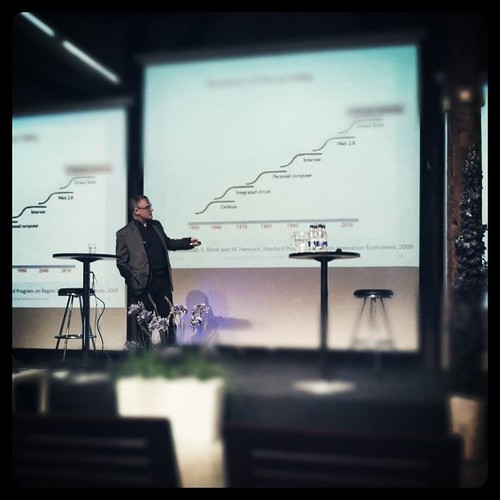
Yesterday I was at a TIVIT next media event, listening to for example Burton Lee from Stanford University. However the most interesting keynote came from Saku Mäkinen, a PhD and Tampere University of Technology professor. And it was about Ecosystems.
Ecosystem Properties
Ecosystems in the nature are about energy flow. Similar idea should be applied to to the business ecosystems, where the energy flows through all the organizations and aims to add value to the end user, argues Mr. Mäkinen. Ususally ecosystems are extremely messy systems (note that these are still organised systems!) and works best if the players are striving towards similar value adding goals. Disruptions, both innovations or market cycles, often break the value adding chain and requires heavy adaptation from each organisation involved, expecially the so called keystone or dominator organisations.

Key points:
- Ecosystems are hierarchical systems
- Ecosystem's organisations have interdependence on each others
- Ecosystems have to be goal oriented
- Ecosystems have modular approach to organize itself
- Ecosystems have to a feedback process in place to enable evolution
Evolution of Ecosystem
Ecosystems tend to organize itself around a certain technology, manufacturing or service process. Mr. Mäkinen says this core element needs to be build down the system as far as possible to make it worthwhile. However, depending on the role of the organization, it can focus on certain niches and still be a very important part of the ecosystem.
According to Mr. Mäkinen, the ecosystem have 3 possible roles: Keystone or Dominator and Niche. Great ecosystems are organic, with no added 'preservaties' or non-natural (for the ecosystem) ingredients. Growth usually evolves around certain roles.
Main role is Keystone player who acts as a source of income and energy for the rest of the ecosystem. This organization is thus usually facing the consumers and needs to have a very need knowledge of the market's needs. This main role is usually taken few big organizations within the markets. These roles are usually created in a heterogenous, fragmented and lucrative markets.
Dominators are similar to Keystone players, but do strive to control the ecosystem to a much higher degree. These organizations need to have massive resources to both create stable energy flow and to adapt on market disruptions. And they need to have even deeper knowledge of the market's needs than Keystone organisations. Usually Dominators evolve in market that are homogenous, mature and lucrative.
The bulk of the ecosystem will consist of specialized niche organization that fulfill a certain role to serve the keystone or dominator roles. The strength of niche is focus, that generates higher productivity and better quality. Therefore keystone/dominator organisations tend to work with these organisation, rather than maintaining all the required parts of the ecosystem themselves. Through innovations, niche players might evolve into keystone / dominator roles.
It is all about the end user!
Mr Mäkinen pointed out that quite often, organisations tend to forget that ecosystem's energy flows towards the end user. The aim of this energy is not to work to the end user, but for the end user. As Charlie Leadbeater has said, ecosystem, like any system, that is self-interested works to you, not for you.
Short summary:
- Ecosystem leadership is no guarantee for advantage nor profits
- Nothing last forever as innovations can disrupt everything
- End user value adding is a focal point. Remember to work for the end user.
Yesterday I was at a TIVIT next media event, listening to for example Burton Lee from Stanford University. However the most interesting keynote came from Saku Mäkinen, a PhD and Tampere University of Technology professor. And it was about Ecosystems.
Ecosystem Properties
Ecosystems in the nature are about energy flow. Similar idea should be applied to to the business ecosystems, where the energy flows through all the organizations and aims to add value to the end user, argues Mr. Mäkinen. Ususally ecosystems are extremely messy systems (note that these are still organised systems!) and works best if the players are striving towards similar value adding goals. Disruptions, both innovations or market cycles, often break the value adding chain and requires heavy adaptation from each organisation involved, expecially the so called keystone or dominator organisations.
Key points:
- Ecosystems are hierarchical systems
- Ecosystem's organisations have interdependence on each others
- Ecosystems have to be goal oriented
- Ecosystems have modular approach to organize itself
- Ecosystems have to a feedback process in place to enable evolution
Evolution of Ecosystem
Ecosystems tend to organize itself around a certain technology, manufacturing or service process. Mr. Mäkinen says this core element needs to be build down the system as far as possible to make it worthwhile. However, depending on the role of the organization, it can focus on certain niches and still be a very important part of the ecosystem.
According to Mr. Mäkinen, the ecosystem have 3 possible roles: Keystone or Dominator and Niche. Great ecosystems are organic, with no added 'preservaties' or non-natural (for the ecosystem) ingredients. Growth usually evolves around certain roles.
Main role is Keystone player who acts as a source of income and energy for the rest of the ecosystem. This organization is thus usually facing the consumers and needs to have a very need knowledge of the market's needs. This main role is usually taken few big organizations within the markets. These roles are usually created in a heterogenous, fragmented and lucrative markets.
Dominators are similar to Keystone players, but do strive to control the ecosystem to a much higher degree. These organizations need to have massive resources to both create stable energy flow and to adapt on market disruptions. And they need to have even deeper knowledge of the market's needs than Keystone organisations. Usually Dominators evolve in market that are homogenous, mature and lucrative.
The bulk of the ecosystem will consist of specialized niche organization that fulfill a certain role to serve the keystone or dominator roles. The strength of niche is focus, that generates higher productivity and better quality. Therefore keystone/dominator organisations tend to work with these organisation, rather than maintaining all the required parts of the ecosystem themselves. Through innovations, niche players might evolve into keystone / dominator roles.
It is all about the end user!
Mr Mäkinen pointed out that quite often, organisations tend to forget that ecosystem's energy flows towards the end user. The aim of this energy is not to work to the end user, but for the end user. As Charlie Leadbeater has said, ecosystem, like any system, that is self-interested works to you, not for you.
Short summary:
- Ecosystem leadership is no guarantee for advantage nor profits
- Nothing last forever as innovations can disrupt everything
- End user value adding is a focal point. Remember to work for the end user.
Tuesday, April 05, 2011
Sometimes it is nice to buy presents
I love shopping at Louis Vuitton store. The service is exceptional and when you walk out, you know your present will make someone happy. :)

Friday, March 18, 2011
Organic Breakfast
Breakfast: organic rustic bread topped with organic garlic cheese. Goes down with Golden Needle tea.
Saturday, February 26, 2011
Some Beijing Roasted Duck
Log
We have had a busy week behind, with tons of meetings, product development. Later on I am able to tell you more about them, however to celebrate this me and Helene decided to go for some Chinese. Got to love Beijing Duck aka Roasted Duck. Superb Chinese dish.
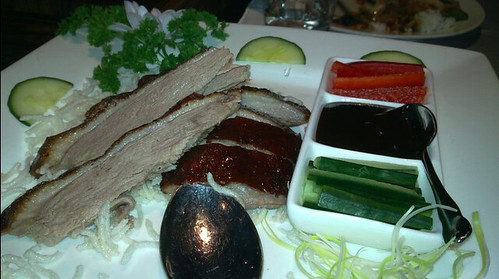
We have had a busy week behind, with tons of meetings, product development. Later on I am able to tell you more about them, however to celebrate this me and Helene decided to go for some Chinese. Got to love Beijing Duck aka Roasted Duck. Superb Chinese dish.
Thursday, February 17, 2011
Promotion Day
Business
ArcticStartup made an article about our latest project Blog!flow. I also love the hectic feeling and excitement to see what people think about your work. Today created some buzz and a lot of new users.
My advice would be was to prepare better for the promotion. And make sure you are technically ready for the increased traffic or users. But more important is to release and prmote often. No use in creating the greatest product of all time and never releasing it. Overall a great day.

Wednesday, February 09, 2011
The Man in Black - CQ UK
Style
Overall, I am a big fan of "The man in black" himself, and these pictures just refresh the style I am kinda fond of. Not on this style everyday, but kinda need to get my groove on towards this gravitational force of a style.


Overall, I am a big fan of "The man in black" himself, and these pictures just refresh the style I am kinda fond of. Not on this style everyday, but kinda need to get my groove on towards this gravitational force of a style.
Tuesday, February 08, 2011
Style the City goes London
Creativity
Our creative project Style the City is going to London. First video uploaded today and now we are already covered style from Helsinki, San Francisco and London. I am super excited about this development and hope to see more cities added in the near future.
In Style the City I am interested to understand how the style of a city forms using an artistic approach of video. Using this approach, I wish to be able to create a network of videographers to work together on this and other projects
For more go to www.stylethecity.com

Tuesday, February 01, 2011
Thursday, January 27, 2011
Monday, January 10, 2011
Wednesday, January 05, 2011
Why is dreaming so important?
Philosophy
...because people crazy enough to think that they can change the world, are the ones that do!
Steve Jobs, 1997
Wednesday, December 29, 2010
GoPro HD camera
Log
Got this new toy delivered on my doors steps. It is GoPro Hero camera for extreme situations. I really need to go scuba diving now. Shoots HD, is really small, 30/60fps and the best part you can take it to 60m depth!


Below are a couple of videos what you can do with it.
And this is what I am going to do with it.
Got this new toy delivered on my doors steps. It is GoPro Hero camera for extreme situations. I really need to go scuba diving now. Shoots HD, is really small, 30/60fps and the best part you can take it to 60m depth!
Below are a couple of videos what you can do with it.
And this is what I am going to do with it.
Tuesday, December 28, 2010
The State of Online Video [Infographic]

http://www.clicker.com/blog/wp-content/uploads/2010/12/YOUTUBE-NATION-12-2.png
Thanks to Jeffthomastech.com
Wednesday, December 15, 2010
Subscribe to:
Posts (Atom)